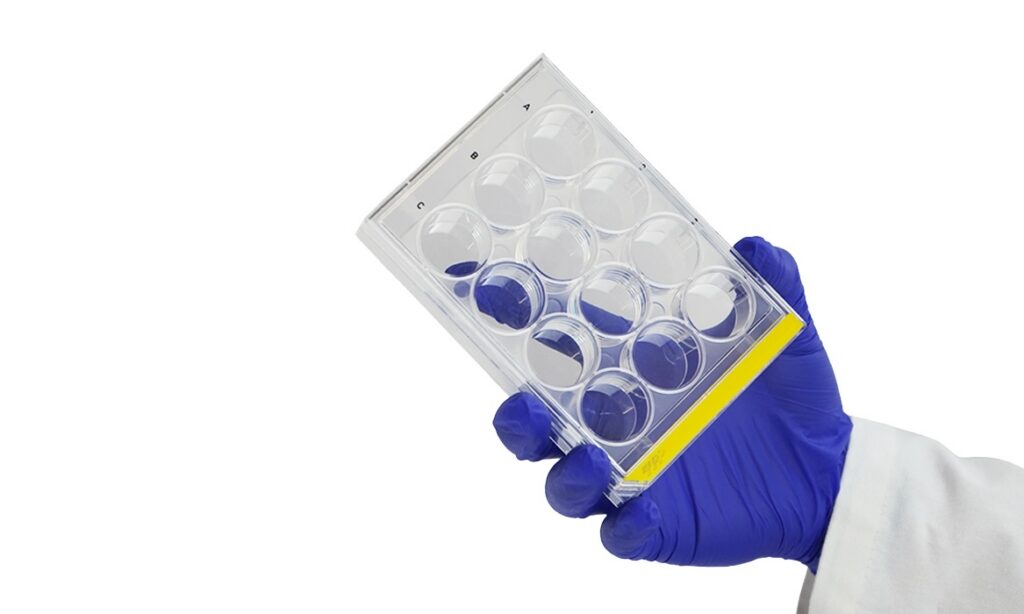
When your research depends on healthy cell growth and consistent results, the plasticware you use matters. TPP tissue culture plates available from MIDSCI are Swiss-made laboratory plastics designed specifically for cell cultivation, photometric measurements, and cell-based assays.
TPP has manufactured tissue culture products since 1966, combining thoughtful product design with high-quality materials and manufacturing standards. For laboratories looking for dependable cell culture plates, TPP plates provide the consistency, optical clarity, surface characteristics, and range of formats needed for everyday research.
What Makes TPP Tissue Culture Plates Different?
Consistency is particularly important in cell culture. Researchers need confidence that the surface supporting their cells will perform reliably from experiment to experiment.
TPP tissue culture plates are designed with growth areas that are opto-mechanically activated to support optimal cell adhesion and growth. The treatment is limited to the bottom growth area rather than the sidewalls of each well, helping concentrate cell growth where researchers need it.
The clear construction also supports observation throughout the cell culture process. TPP plates can be used with common cell imaging systems and absorption plate readers when the instruments are appropriately adjusted for the plate dimensions.
Together, these features make TPP plates a practical option for cell cultivation, cell-based assays, microscopy, and other workflows where researchers need to reliably observe and work with their cells.
High-Quality Polystyrene Construction
TPP tissue culture plates are manufactured from polystyrene that meets USP Class VI requirements.
Polystyrene is commonly used for cell culture labware because it combines clarity with the physical characteristics needed for routine laboratory use. With TPP plates, that clear material makes it easier to visually monitor cultures and supports microscopy and imaging applications.
The plates are designed for single use and have a specified operating temperature range of -40°C to +70°C. They are not autoclavable.
For researchers who rely heavily on cell culture plastics, consistency in materials and construction can make a meaningful difference. TPP products are manufactured in Switzerland from virgin synthetic polymers with a focus on precision and repeatable quality.
Choose the Right TPP Plate Format for Your Experiment
Different cell culture applications require different growth areas, working volumes, and sample capacities. TPP tissue culture plates are available in several common multi-well formats, allowing researchers to select a plate based on the needs of their protocol.
MIDSCI offers TPP plates in formats including:
- 6-well plates: Provide a larger growth area per well for applications requiring more cells or larger working volumes.
- 12-well plates: Offer a balance between individual growth area and the number of samples that can be run on a single plate.
- 24-well plates: Useful for experiments that require additional sample capacity while maintaining sufficient growth area per well.
- 48-well plates: Allow researchers to work with more samples at smaller volumes.
- 96-well plates: Well-suited for higher-throughput cell-based assays, screening, and workflows involving larger numbers of samples.
Selecting the right format can help researchers make efficient use of cells, media, reagents, and available incubator space.
TPP tissue culture plates also have a uniform base area designed according to ANSI recommendations, helping support compatibility with common laboratory equipment.
Designed With Cell Culture in Mind
One of the most important considerations when choosing cell culture plates is the surface itself.
Untreated polystyrene does not naturally provide an ideal surface for many adherent cells. That’s why the growth surfaces of TPP tissue culture plates are specifically activated to promote cell attachment and growth.
This makes the plates appropriate for a range of adherent cell culture applications. TPP also provides different laboratory plasticware for researchers working with other culture requirements, so it’s important to select a product whose surface and format match the cells and protocol you’re using.
If you’re unsure which plate or surface is appropriate for your cells, a MIDSCI Lab Consultant can help you compare the available TPP options.
Sterility You Can Depend On
Contamination can quickly compromise a cell culture experiment, making sterility an important consideration when choosing plates.
TPP tissue culture plates are supplied sterile for aseptic cell culture workflows. TPP specifies a sterility assurance level (SAL) of 10⁻³ according to ISO 11137, along with an endotoxin level of less than 0.06 EU/mL.
Each plate also includes a lid designed to reduce the risk of cross-contamination between the wells and the surrounding environment.
Researchers should always check that the packaging is intact and confirm the expiration date before use. Plates should then be opened and handled using appropriate aseptic technique.
Built for Clear Observation and Imaging
Being able to see what’s happening inside your wells is essential for many cell culture applications.
The clear polystyrene construction of TPP plates supports visual observation, while the plate design can also accommodate common cell imaging systems and absorption plate readers when those instruments are configured with the appropriate plate measurements.
Correct dimensions matter when using automated imaging or measurement equipment. Exact well centering is important for accurate readings, and cell imaging systems may require the appropriate bottom thickness to be entered into the instrument software for proper microscope focus.
TPP provides detailed dimensional information that laboratories can use when configuring compatible equipment.
Quality You Can Verify
Reliable laboratory plasticware should come with clear specifications, particularly when you’re using it for sensitive cell culture applications.
In addition to USP Class VI polystyrene and defined sterility and endotoxin specifications, TPP provides product documentation that researchers can reference for individual products. Instructions for use, chemical resistance information, and applicable quality certificates are also available from TPP.
That documentation can be particularly useful for laboratories that need greater traceability when qualifying consumables or establishing standardized cell culture workflows.
Consider More Than the Price Per Plate
Cost will always be part of purchasing laboratory consumables, especially for facilities that go through large quantities of cell culture plates. However, price per plate doesn’t tell the entire story.
Consider how reliably the plates support your workflow. Inconsistent cell attachment, poor visibility, or unsuitable plate dimensions can cost considerably more when they result in repeated work or wasted cells, media, and reagents.
Packaging quantity also matters. Think about how quickly your laboratory uses each plate format and how products will be stored before use. Selecting appropriate case quantities can help you maintain the supplies you need without unnecessarily occupying valuable laboratory storage space.
MIDSCI can help laboratories evaluate TPP products and purchasing quantities based on their workflow and ongoing cell culture needs.
Why Buy TPP Plates From MIDSCI?
MIDSCI believes that purchasing laboratory supplies should come with more than a box arriving at your door.
Our Lab Consultants work with researchers to help identify products that fit their applications and solve problems when they arise. MIDSCI stocks and distributes TPP products, giving laboratories access to Swiss-made cell culture plasticware backed by personalized support from a team that understands laboratory research.
TPP tissue culture plates are just one part of a broader line that includes tissue culture flasks, dishes, tubes, and TubeSpin® Bioreactors. That makes it easier to use trusted TPP plasticware across multiple stages of your cell culture workflow.
Find the Right TPP Tissue Culture Plates for Your Lab
From 6-well plates for larger cultures to 96-well formats for higher-throughput applications, TPP tissue culture plates give researchers options for a wide range of cell culture workflows.
Explore TPP® multi-well plates from MIDSCI, or connect with one of our Lab Consultants if you need help determining which plate format, growth area, or working volume is best suited for your cells and application.
Buy TPP Tissue and Cell Culture Plastics
A MIDSCI lab consultant is here to help anytime! Or Call 800.227.9997